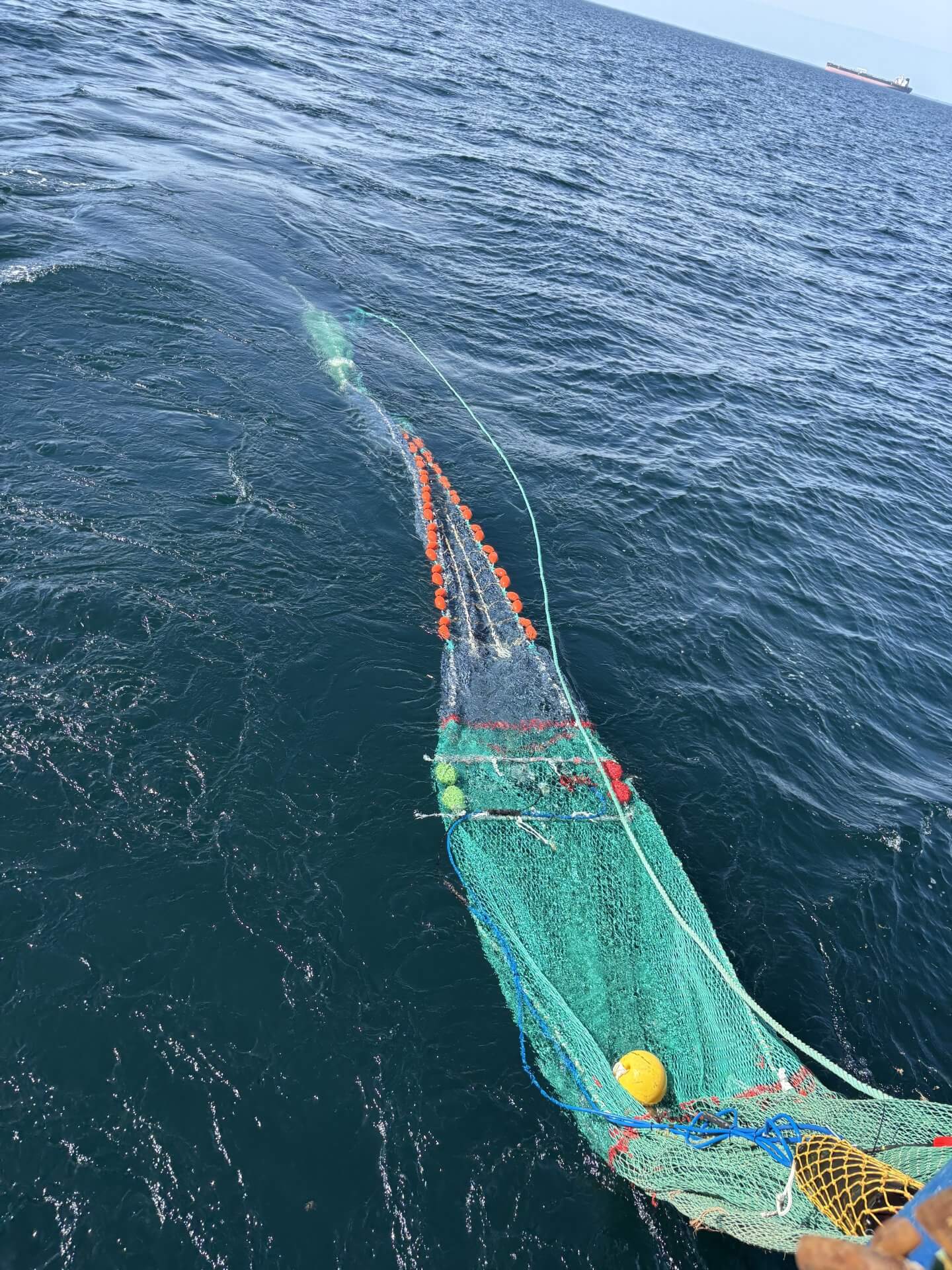
Throughout the summer, the ECO-CATCH team have been conducting sea trials across the Baltic and North Sea. One of our teams went aboard a bottom otter trawler targeting Norway lobster. The research team set out to test how acoustic cameras can aid in observing how fish respond to gear components and subsequently inform the design of technology to facilitate the reduction of bycatch of non-target fish.
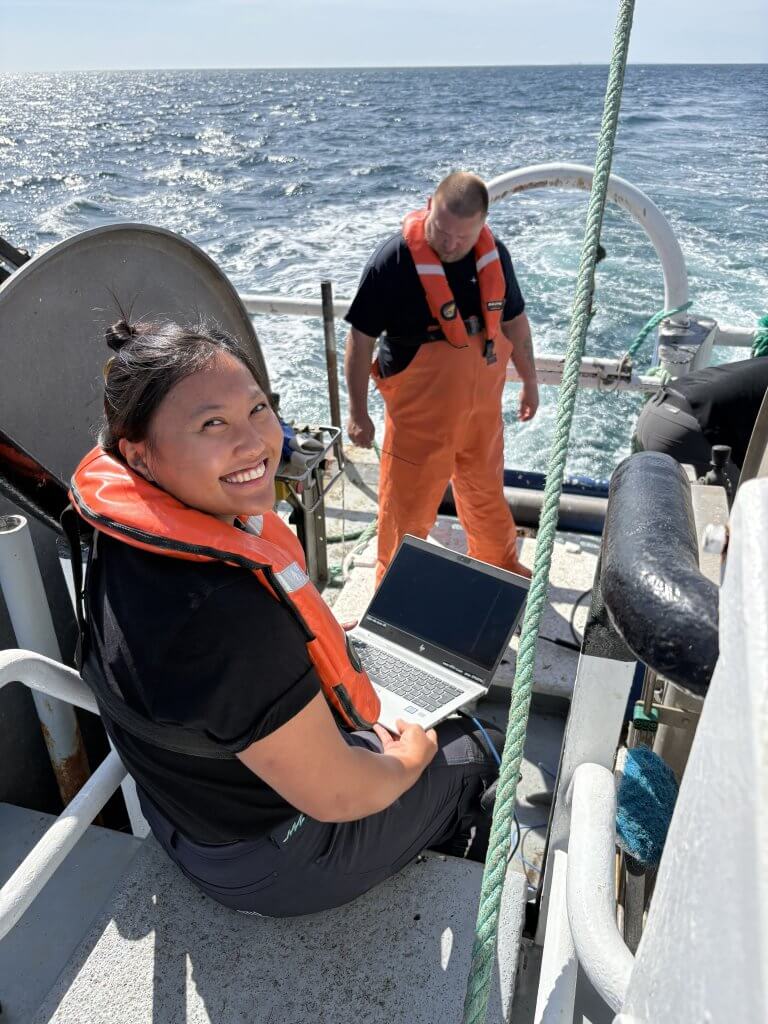
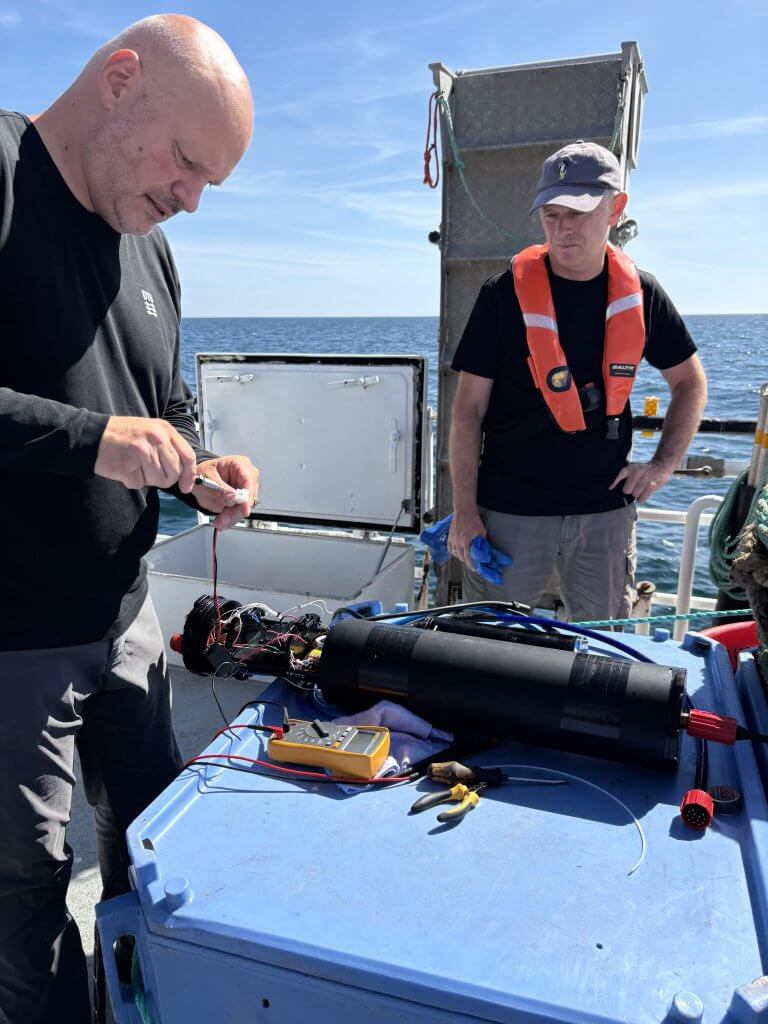
Senior Research Scientist Junita Karlsen, Postdoctoral researcher Alexa Abangan and Electronic Technician Eik Britsch spent time aboard DTU Aqua research vessel Havfisken, fitting the cameras and recording data that will inform the ongoing development of escape panels, fitted to fishing gear to improve selectivity and to enhance the likelihood of fish escaping through these specially designed selection windows.
Two types of cameras were used to collect comprehensive data. An acoustic camera mounted on the top panel of the net allowed visualisation of the distribution, swimming direction, and swimming speed of the fish in the extension piece and allowed the team to observe how the fish escaped through the panel. An infrared optical stereo camera was also used to identify the species of fish detected by the acoustic cameras at a short range. In order to verify the accuracy of the acoustic camera detections, the researchers also collected catch data on the proportion of each species caught by the trawl gear.
In this initial trial, the team encountered some difficulties with completing the full range of planned data collection due to issues relating to the communication cable used to see footage in real time. The cameras used in ECO-CATCH’s trial can be controlled aboard vessels, and have adjustable settings which facilitate the camera angle and can be optimised to the sea conditions to achieve the highest quality data. However, the required data stream from these high-tech cameras pushed the limit of the communication cable and made it difficult to maintain a reliable connection. The initial results and learnings of this trial have informed the next stage in the iterative design and development process, and work is underway to improve the observation system ahead of the next trial phase.
In September, all the hard work paid off! Another trial was conducted, during which the team were able to successfully collect observations of fish in the escape panel section and catch accumulation area.
Stay tuned for more updates!
Contact us:
info@eco-catch.eu
Follow us: